
Glass, water and glows
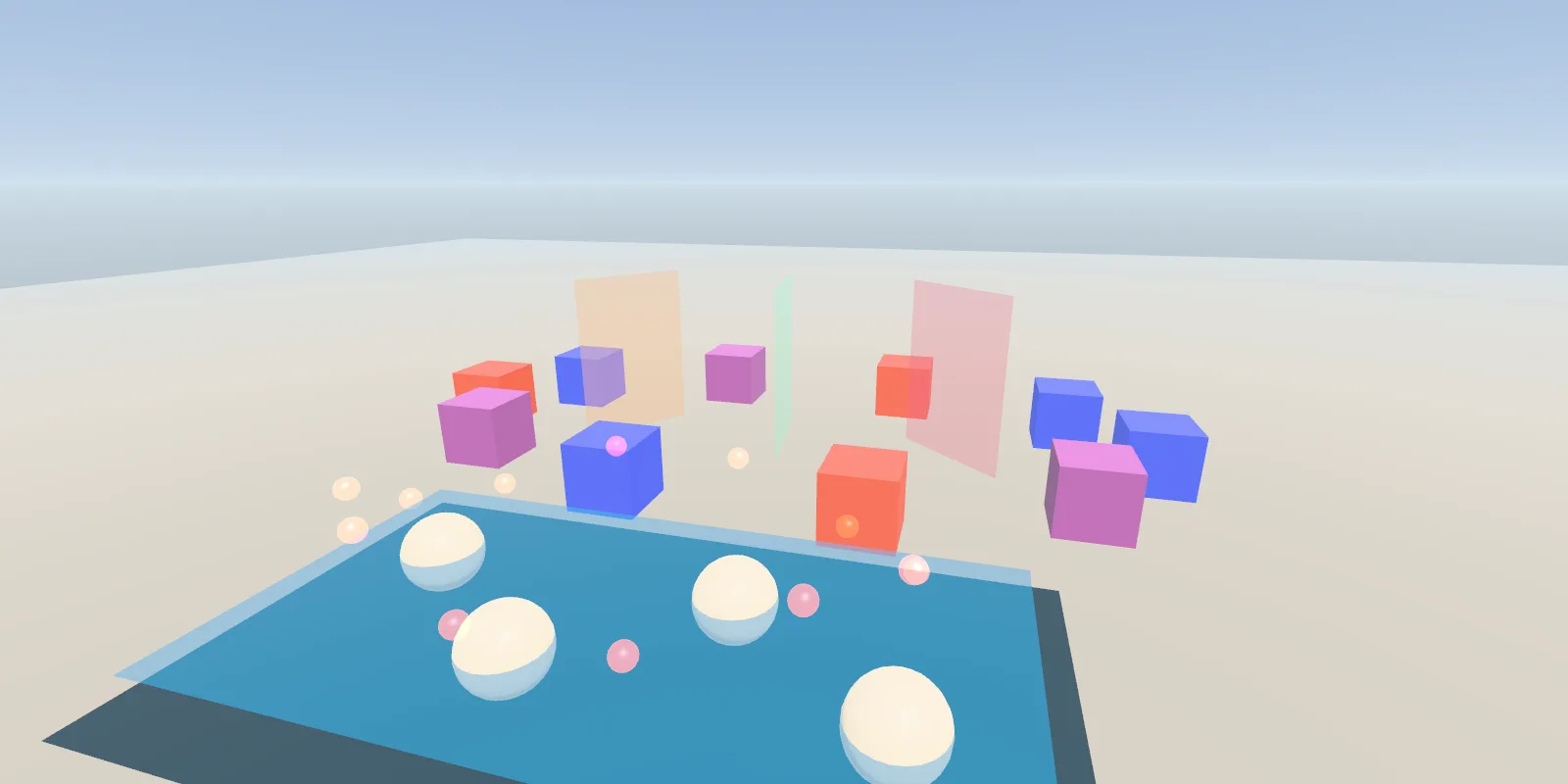
A material’s opacity (its colour’s alpha) is how much of it there is.
Made with one below 1, the material is see-through:
/// Tinted glass, and a pool's water: a third and a half of them there.final glass = Material(color: Color.rgb(1, 0.7, 0.3), opacity: 0.35, roughness: 0.1, doubleSided: true);final water = Material(color: Color.rgb(0.12, 0.44, 0.55), opacity: 0.55, roughness: 0.05);
/// A spark: black, so all it shows is its glow, added to what's behind.final spark = Material(color: Color.black, emissive: Color.rgb(1, 0.4, 0.1), blending: Blending.additive);
/// A ghost fading out over a second.void fadeOut(GameObject ghost) { final material = ghost.get<MeshRenderer>()!.material!..blending = Blending.transparent; ghost.tween(1.0, 0.0, seconds: 1, onUpdate: (v) => material.opacity = v);}Blending.transparentlays the surface over what’s behind it: at an opacity of 0.35, about a third of it and two thirds of what’s behind. Everything it shows fades with it, its highlights and glow too (glTF’s BLEND, Unity’s Fade). A model’s BLEND materials load as this.Blending.additiveadds the surface’s light, times its opacity, to what’s behind: glows, flames, sparks and beams. Black adds nothing, so give it anemissive. It brightens what’s behind, so it shows best against the dark.blendingis picked for you only byMaterial(opacity:)below 1. Settingopacitylater changes the alpha alone: a material made opaque stays opaque (blendingchanges it), and its alpha is ignored.- They’re drawn after everything solid, the furthest object first (by its middle), each over what’s behind it, and after the sky. Within one object the order is its triangles’: a glass jar can draw its far side over its near one. If that shows, split the object in two. Two see-through objects that cross each other can’t both be in front, so one of them is wrong where they cross.
- They hide nothing. What’s drawn later shows through them, so they don’t write to the depth buffer; a solid object behind one is still drawn, and a solid one in front of it hides it.
- They take light and fog as solid surfaces do, and cast no shadow.
- With an
alphaCutofftoo, what’s below the cutoff isn’t there, and the rest is see-through. - Many see-through objects on top of each other cost more than solid ones: each pixel is drawn once per layer. The lab’s ‘Look: glass, water and glows’ scene adds 400 panes to measure it.