
Lights
Light.sun shines along its object’s forward, the same everywhere;
Light.sun(direction: …) turns the object to it. Light.ambient lights
everything alike. Light.point and Light.spot are lamps.
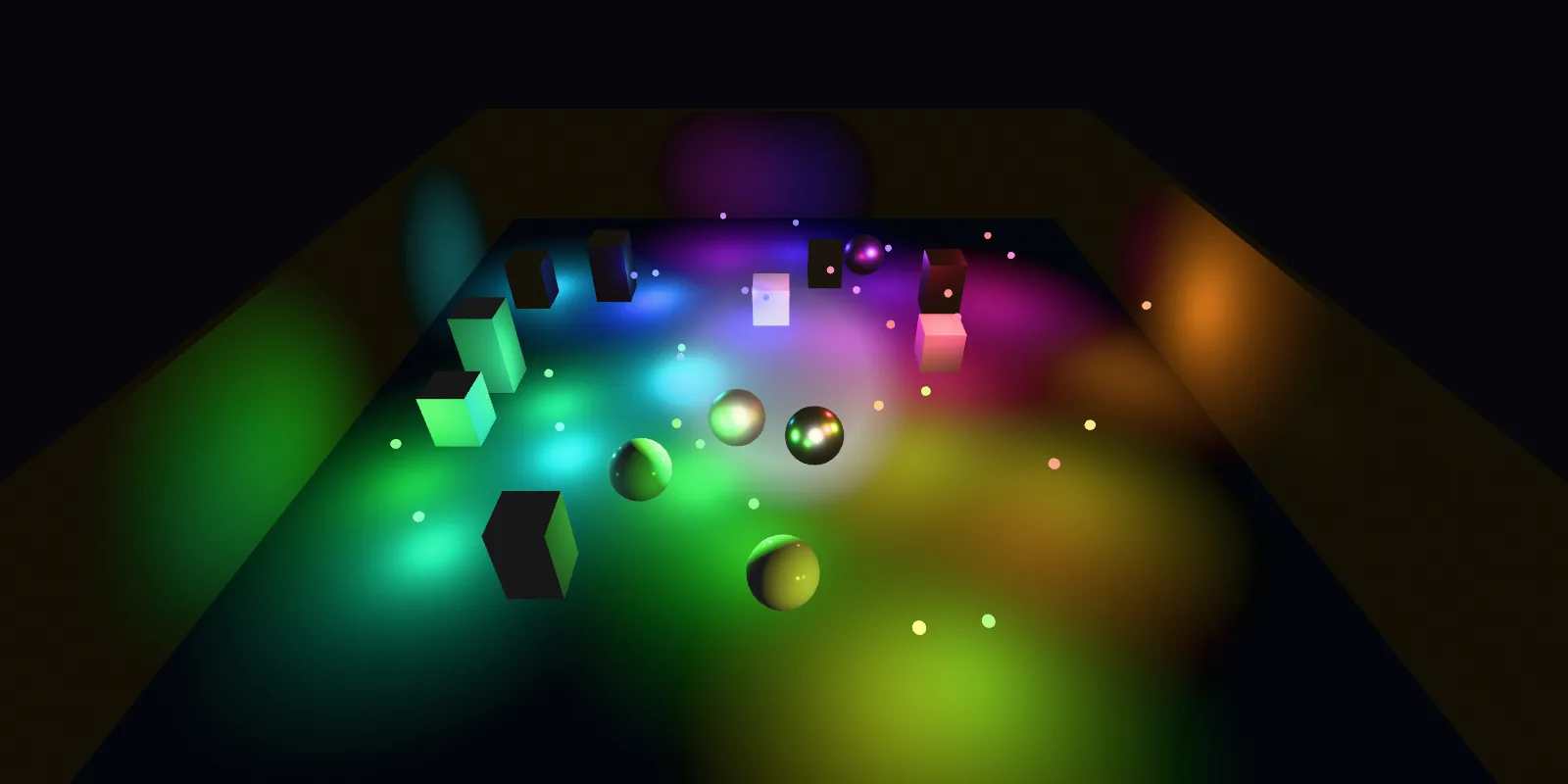
A point light shines from its object’s position every way; a spotlight
shines from there along the object’s forward, in a cone. Both reach
range metres and fade smoothly to nothing there:
/// A warm lamp on a post, reaching 8 m.GameObject lampPost(Vec3 at) => GameObject(  name: 'lamp post',  transform: Transform(position: at + Vec3(0, 2.5, 0)),  components: [Light.point(color: Color.rgb(1, 0.8, 0.55), intensity: 10, range: 8)],);
/// A torch that shines where its object faces: turn the object to aim it.GameObject handTorch() => GameObject( name: 'torch', components: [Light.spot(intensity: 40, range: 20, angle: 30.deg, softness: 0.3)],);- Brightness is the sun’s, at 1 m: a lamp of
intensity1 lights a surface 1 m away as a sun of 1 does, and a quarter as much at 2 m (light falls off with the square of the distance). A room lamp 2–3 m from what it lights wants 5 to 20; a torch across a room, 50 and up. angleis the cone’s width, edge to edge, up to 179°.softnessis how much of it fades, from the rim in: 0 is a hard edge, 1 fades all the way to the middle.- Every sun lights everything, up to four of them.
- A lamp lights everything it reaches, whatever it falls on: a big floor,
terrain or a room in one piece is lit by every lamp over it, however many
overlap. What costs is how many overlap: each pixel adds up every lamp that
reaches it. Without
Quality.lampHighlights(as at low) lamps light a surface’s colour but give shiny surfaces no highlight (suns still do), which keeps a crowded room fast on phones. - A frame takes 64 lamps in view, the ones nearest the camera. A world with more than 64 point and spot lights, or more than four suns, says so once.